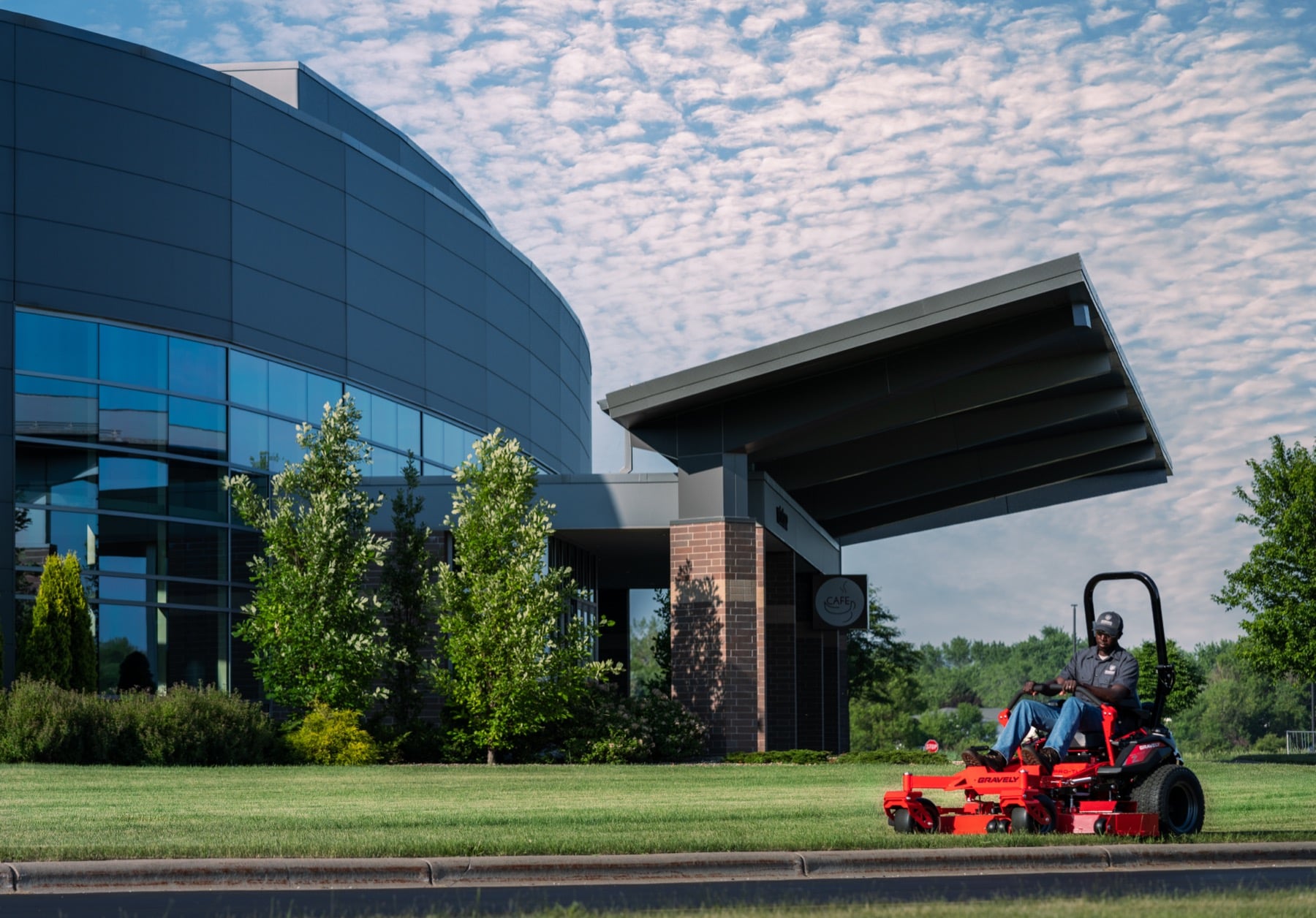
Who this group is for
How to choose inside it
Measure the narrowest opening on the route
That number caps the deck. Everything else is preference.
Count the stops, not the acres
On and off time dominates a dense route.
Look at the slope honestly
If it is steep enough to worry you seated, it is a stand-on or a walk-behind.
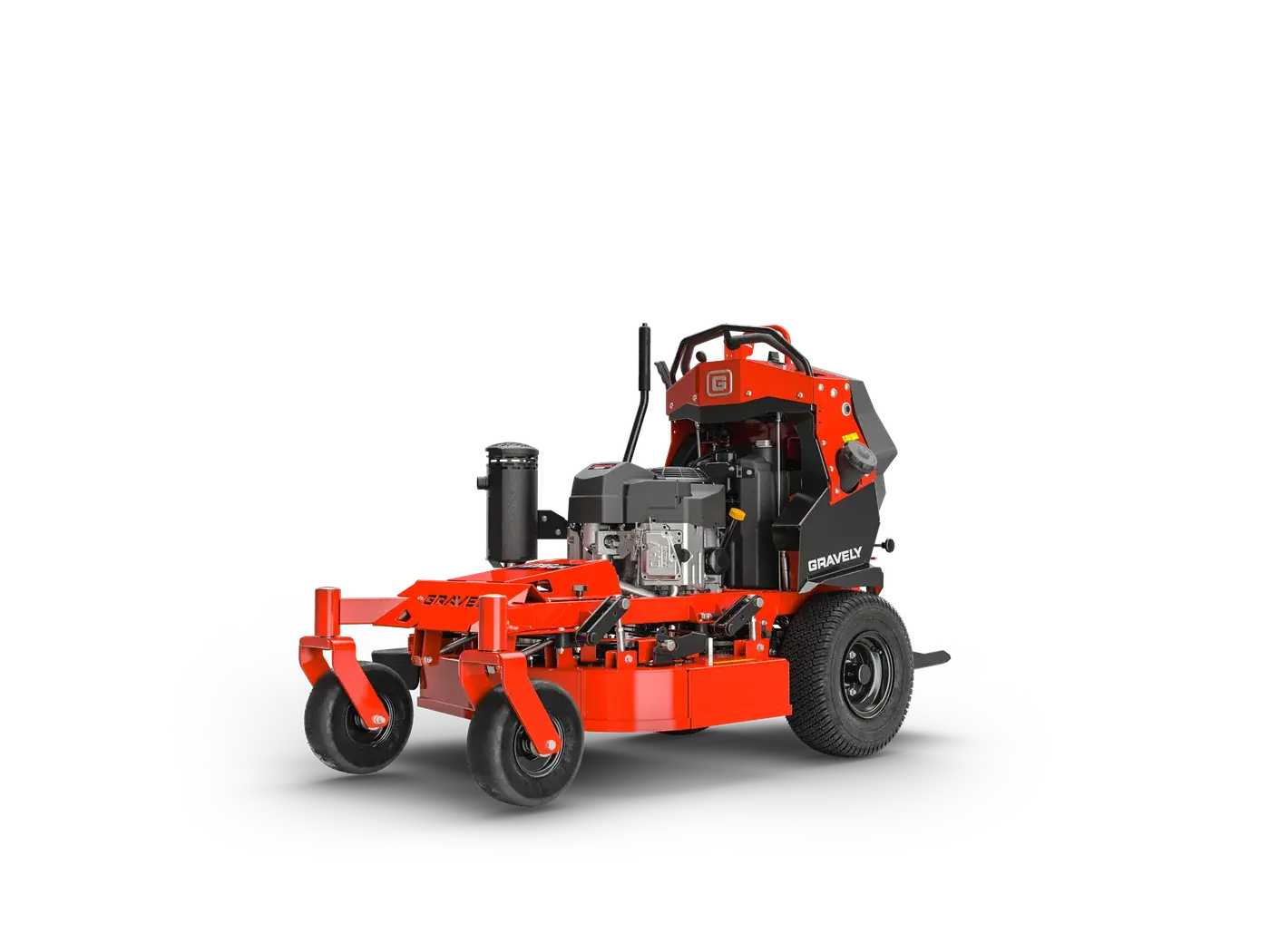
Pro-Stance
Stand-on, from a 32-inch deck that clears a gate to a 60. You are on and off the machine in a second, wh…
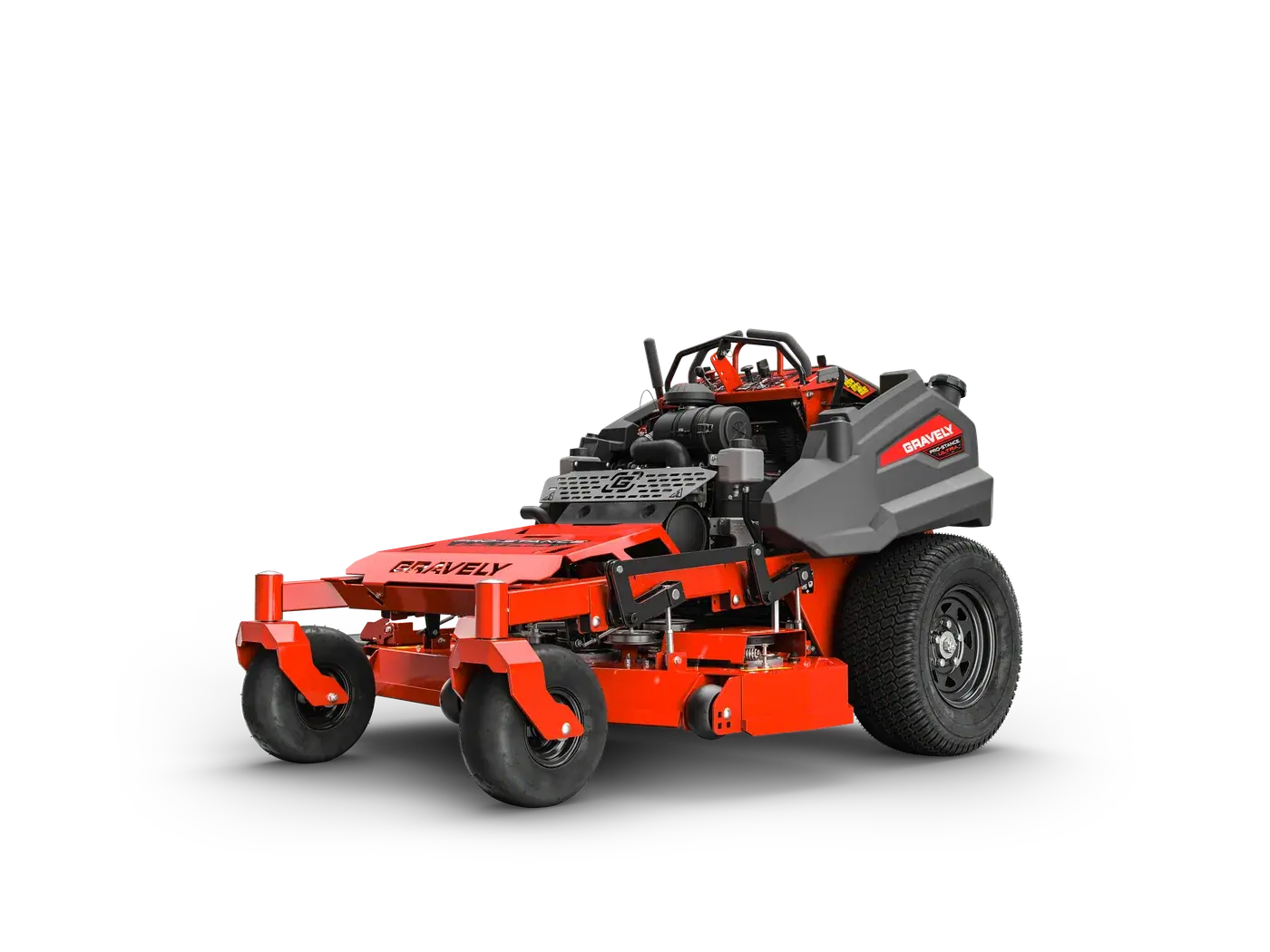
Pro-Stance Ultra
The most powerful stand-on Gravely® builds, up to a 72-inch deck. For crews who want stand-on handling w…
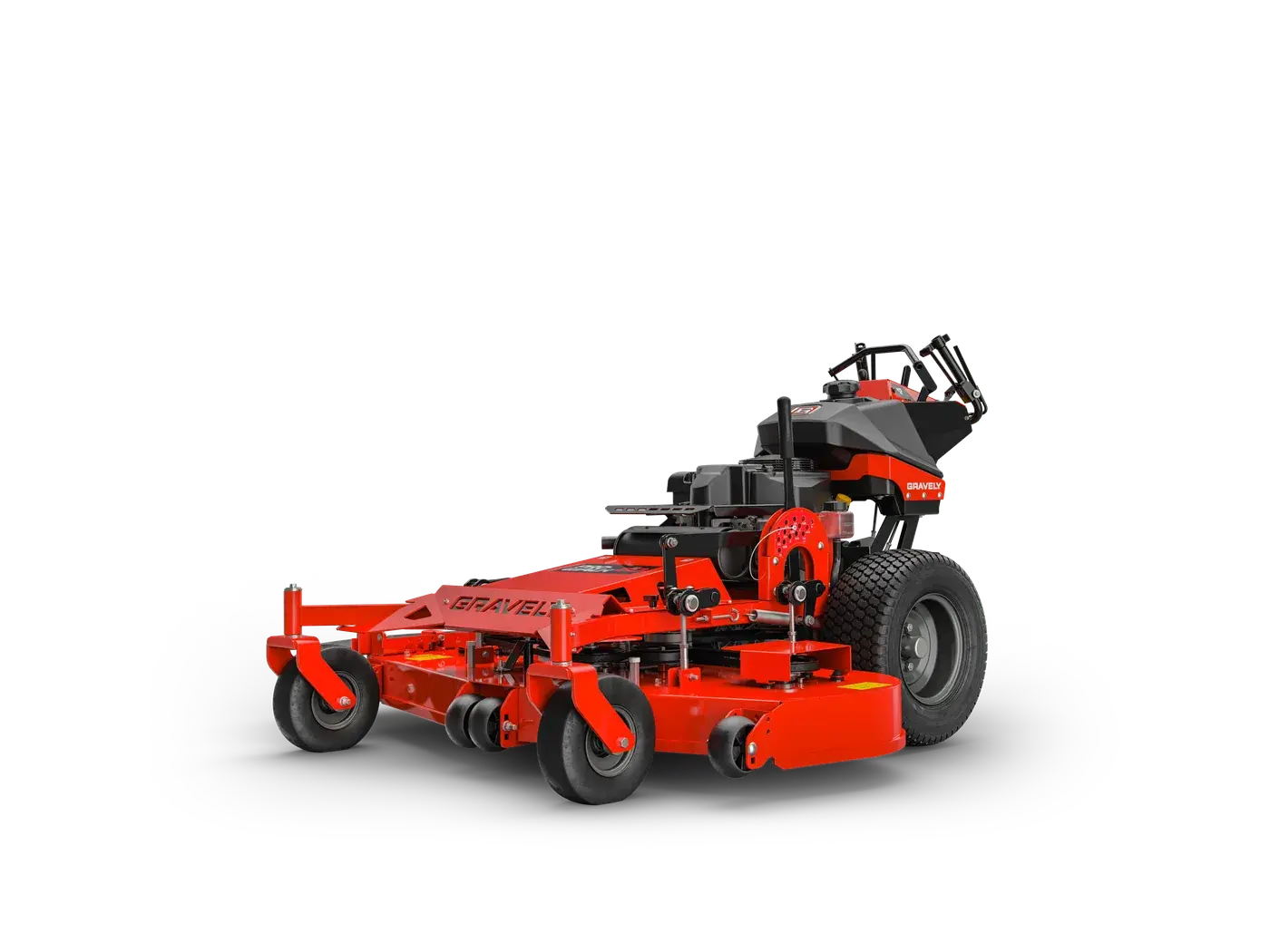
Pro-Walk Hydro
Hydro-drive walk-behind, 36 to 60 inches. Where a rider will not fit, or should not go.
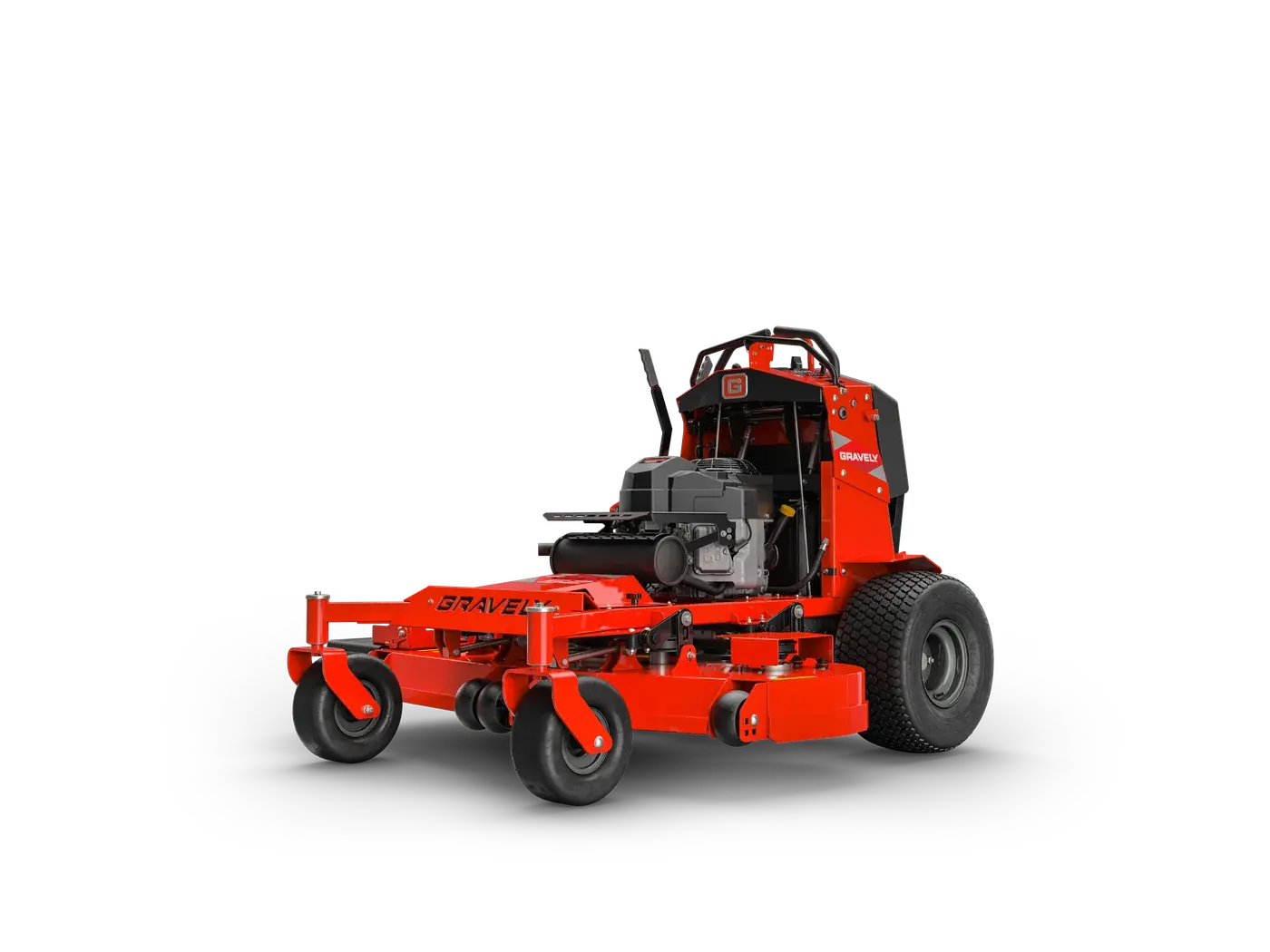
Z-Stance
A lighter stand-on with a choice of X-Factor® 2 or 3 decks, including a 32-inch that fits through a stan…
Scale runs 30″ to 72″. Each bar is the deck widths that series is actually built in.
Set up to the operator
Platform and controls adjusted to whoever runs it.
Wear parts in stock
Belts and blades for the series you run.
Winter scheduling
Book service before the season, not during it.
Is a stand-on safer on a slope than a zero-turn?
It puts your weight lower and lets you step off, which is why crews choose them for banks. No mower is safe on ground beyond its rating — read the manual for your model.
What deck fits through a standard gate?
It depends on the gate. Measure it; the narrowest decks in this group are built for exactly that problem. See the deck size guide.
Are walk-behinds slower?
On open ground, yes. On steep or small ground they are often the only machine that can do the job at all.
Can one crew run both?
Most do — a stand-on for the route and a walk-behind for the ground it cannot take.
Who services them?
The same Koenig shops that service the rest of the line.